Key Metrics for Aesthetic Clinic Success
Aesthetic Clinics, Profitability, KPIs
The Aesthetic Clinic Numbers That Matter: Revenue, Profit and Growth
For ambitious clinic, medspa, salon and wellness owners, a full diary is no longer the goal. Sustainable, profitable growth is. That starts with understanding the numbers that actually matter and putting them on a simple monthly dashboard you review without fail.
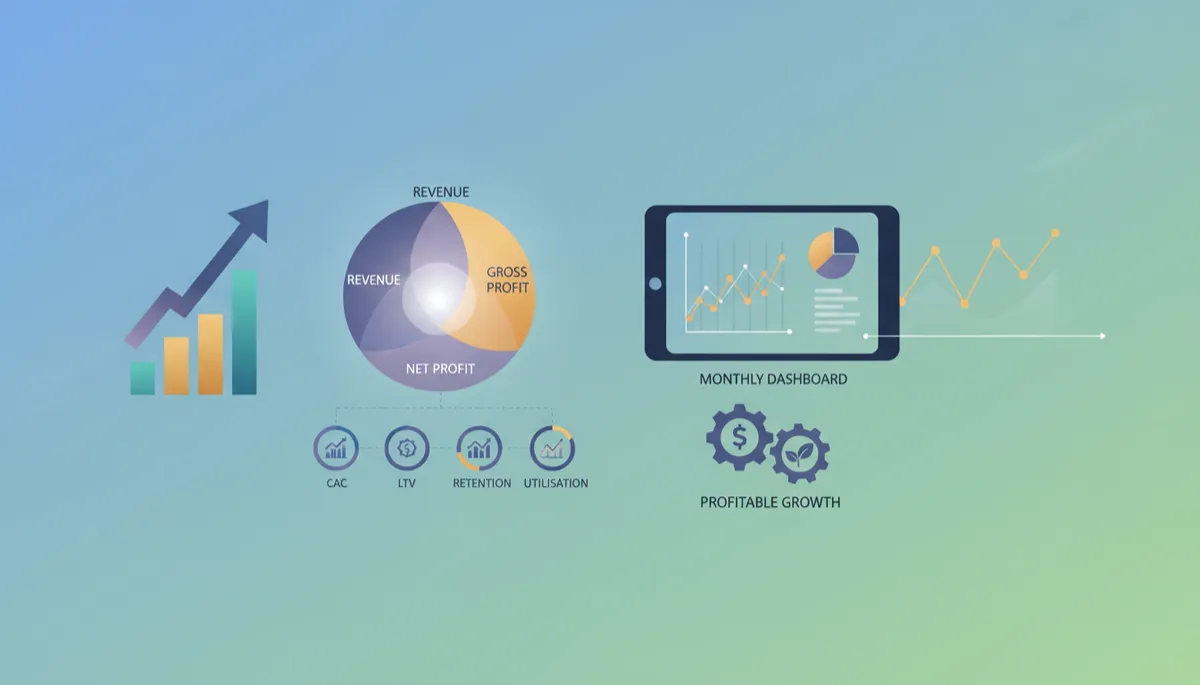
Revenue vs Gross Profit vs Net Profit: The Foundations
In a market projected to exceed $20 billion in the U.S. alone by 2026 (Dimension Market Research), it is easy to chase top-line growth and overlook profitability. Yet the clinics Brand Xcellence works with that scale calmly, pay their teams well, and give owners breathing space all have one thing in common: they know the difference between revenue, gross profit and net profit, and track each monthly.
Revenue is the total money your clinic brings in from treatments, retail, memberships and packages before any costs are deducted. It tells you how big the pie is, not how much you keep.
Gross profit is revenue minus direct treatment costs – products, consumables, practitioner treatment pay, and device usage costs. It shows how profitable your services are before overheads like rent and marketing.
Net profit is what remains after all expenses: payroll, rent, software, finance costs, marketing, admin and realistic owner pay. This is the money that funds growth, buffers downturns and rewards you for the risk you take.
Industry benchmarks show well-run medspas achieving 15–30% net profit margins, with top performers reaching 25%+ (BizMetricsHQ, Pronk Marketing). Hitting those levels is impossible if you only look at revenue and ignore gross and net profit.
Why These Metrics Matter for Clinic Owners
When Brand Xcellence reviews numbers with clinic owners, the pattern is consistent: revenue is up, the calendar is packed, but cash is tight and the owner feels trapped in the treatment room. The issue is not demand; it is margin and efficiency.
Revenue tells you if your marketing and capacity are working at a basic level – are people buying?
Gross profit reveals whether your pricing, pay structures and treatment mix are healthy. A busy clinic with poor gross margins will always feel like hard work for little reward.
Net profit decides how fast you can reinvest in new technology, senior hires, and additional locations – and how much freedom you as the owner actually enjoy.
📌 Key Takeaway: A full calendar can coexist with weak profits. Profit metrics protect you from growing into burnout instead of into a stronger business.
The KPIs That Turn Data into Decisions
Once revenue, gross profit and net profit are clear, the next step is to track a focused set of KPIs that explain why those numbers are moving. For aesthetic clinics, dental practices, salons and wellness businesses, Brand Xcellence recommends the following as non‑negotiables:
Gross Profit Margin
Gross profit margin is gross profit divided by revenue, expressed as a percentage. Many high-performing clinics target 75%+ gross margin on services (ProspyrMed). If your margin is slipping, it usually points to discounting, over-generous commissions, product wastage or an unbalanced treatment mix.
Revenue per Treatment Hour
Revenue per treatment hour measures how much income each clinical hour generates. With top clinics targeting $850+ per treatment room hour (ProspyrMed), this KPI shows whether your pricing, protocols and scheduling are optimised – or whether your most valuable hours are being filled with low-value services and discounts.
Client Acquisition Cost (CAC) and Lifetime Value (LTV)
CAC is the total marketing and sales spend required to win a new client – including ads, agency fees and front-desk time. In many aesthetic markets, a paid consult can cost $180–$280 to acquire via ads (Aesthetic Patient Acquisition benchmarks).
LTV (or CLV) is the total revenue a client brings over their relationship with your clinic. Healthy aesthetic clinics often see $4,500–$8,000+ in five-year LTV (Aesthetic Patient Acquisition). When your LTV is several times higher than your CAC, marketing becomes an investment, not a cost.

When LTV clearly exceeds CAC, clinics can scale marketing with confidence instead of guesswork.
Rebooking and Retention Rate
Rebooking rate tracks how many clients leave with their next appointment already booked. Retention rate measures how many clients return within a set period (often 6–12 months). With typical annual churn of 40–50% in aesthetics (Aesthetic Patient Acquisition), improving retention even modestly can add hundreds of thousands in LTV without spending more on ads.
Practitioner Utilisation
Practitioner utilisation is the percentage of available clinical hours that are actually booked and delivered. Many premium operators aim for 80–85% utilisation per room or provider. Too low, and you are carrying unnecessary payroll; too high, and you risk burnout, errors and no capacity for high-value clients.
Break-Even Revenue
Break-even revenue is the monthly income your clinic must generate to cover all fixed and variable costs – with the owner paid fairly. Knowing this number changes the conversation from “Are we busy?” to “Have we cleared break-even, and how much profit are we adding this month?”
💡 Pro Tip from Brand Xcellence: Put your break-even revenue on the wall in the office. It focuses the whole team on profitable days, not just busy days.
Build a Monthly Dashboard, Not a Once-a-Year Report
High-growth clinics are increasingly using simple, technology-enabled dashboards rather than static spreadsheets. With revenue per location averaging around $1.4 million in U.S. medspas (Dimension Market Research), small percentage shifts in margin and utilisation translate into significant profit gains – but only if you catch them early.
Track monthly: revenue, gross profit, net profit, gross margin, revenue per hour, CAC, LTV, rebooking and retention, practitioner utilisation and break-even revenue.
Review trends, not just single points – three- and six-month moving averages show whether changes are sticking.
Use your practice management system and AI tools where possible to automate data pulls, so the dashboard becomes a habit, not a chore.
Connect Marketing Activity Directly to Revenue and Retention
In 2026, with paid consults often costing hundreds of dollars to acquire and 70% of patient research starting via AI summaries (BlueWolf), guessing your marketing ROI is no longer acceptable. Your dashboard should link:
Campaigns → Leads → Booked consults → Revenue (to calculate true CAC and revenue per campaign).
Channel → Client cohort → Retention and LTV (to see which channels bring loyal, high-value clients instead of one‑off bargain hunters).
This is where Brand Xcellence’s focus on reducing marketplace dependency comes in: by understanding which activities drive profitable, repeat clients, you can step away from constant discount offers and build a brand that compounds in value.
From “More Bookings” to Sustainable, Profitable Growth
The clinics winning in today’s fragmented, fast-growing aesthetic market are not just the ones with the loudest marketing. They are the ones that:
Track both revenue and profit every month, not just at year-end.
Optimise gross profit margin, revenue per hour and utilisation so each day in clinic is genuinely profitable.
Invest in marketing only when CAC, LTV, rebooking and retention show that new clients will become long-term, premium clients.
That is how you build a clinic that grows without constant owner hustle, endless discounts or dependence on third‑party marketplaces – a core promise behind Brand Xcellence’s consultancy work.
If you would like expert eyes on your numbers, you can book a 30‑minute Revenue Recovery Audit or a 20‑minute Discovery Call with Brand Xcellence to identify hidden profit, retention and scalability opportunities in your clinic.


