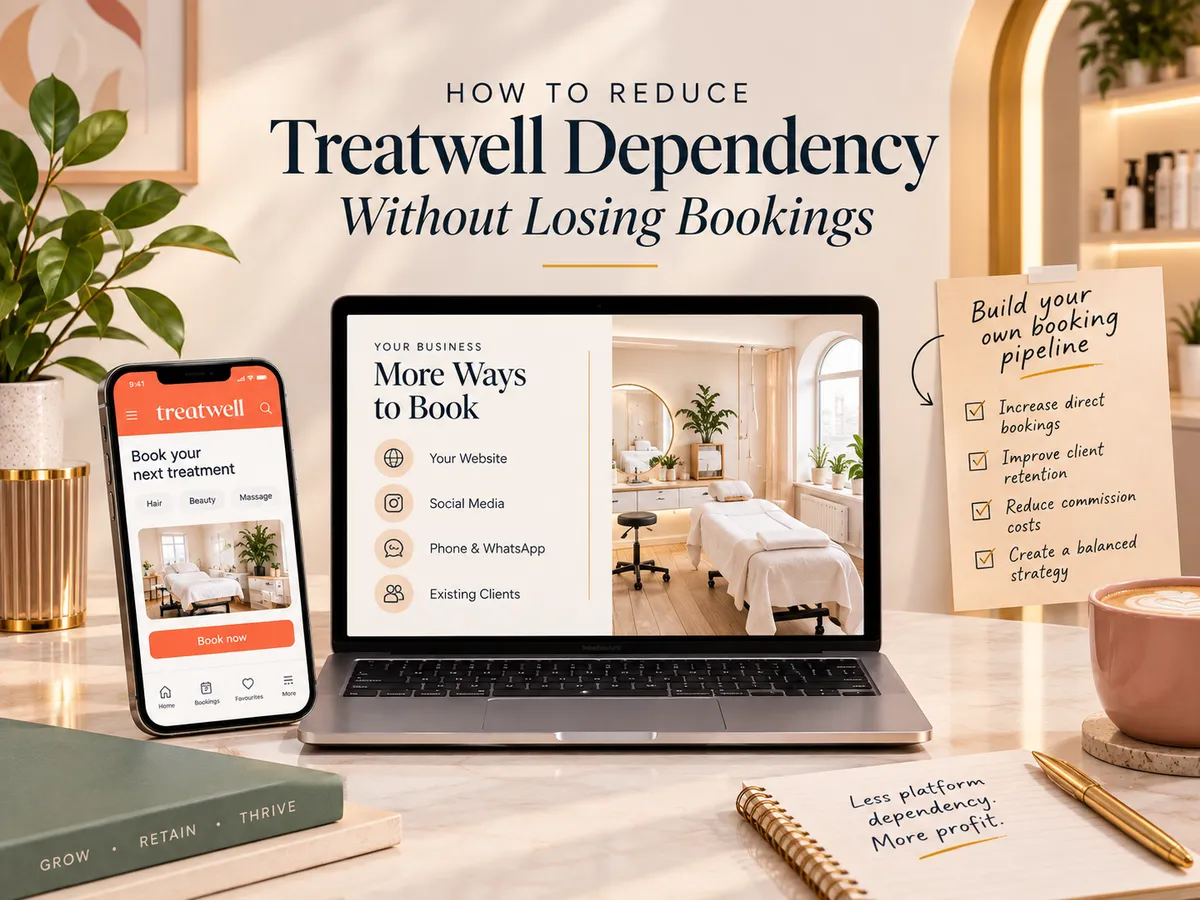
How to Reduce Treatwell Dependency Without Losing Bookings
Treatwell can help UK salons and beauty businesses attract new clients. But when a large share of your bookings depends on one marketplace, it can become difficult to build a reliable direct booking pipeline.
The solution isn't necessarily to stop using Treatwell overnight. Instead, build a booking and retention system that allows your salon or aesthetic clinic to attract, convert and retain clients through multiple channels.
Here's how to reduce Treatwell dependency without putting your appointment bookings at risk.
1. Understand Where Your Bookings Come From
Before reducing Treatwell dependency, understand your current booking mix.
Track how many appointments come from:
Treatwell marketplace
Google Search and Google Business Profile
Instagram and social media
Your website
Phone and WhatsApp enquiries
Existing client referrals
This gives you a clearer picture of which channels generate bookings and where you have opportunities to grow.
Treatwell's official UK pricing confirms that commission applies to new clients introduced through its marketplace, while direct bookings and repeat bookings are treated differently under its published terms.
Treatwell +1
2. Build a Stronger Direct Booking System
One of the most effective ways to reduce reliance on Treatwell is to make direct booking simple and convenient.
Your salon or clinic should have:
A mobile-friendly booking page
Clear treatment and service information
Easy-to-find booking links on Instagram
A straightforward enquiry process
Automated confirmations and reminders
Your website and social media should not only showcase your services. They should help interested visitors move from discovery to booking with fewer obstacles.
3. Turn Existing Clients Into Repeat Bookings
Acquiring a new client is only one part of business growth. Encouraging clients to return can support more predictable revenue.
Create a consistent rebooking process by:
Offering the next appointment before the client leaves
Sending appropriate follow-up reminders
Monitoring clients who have not returned
Communicating relevant treatment or service updates
Making future appointments easy to schedule
For clinics, this may include treatment plans and maintenance appointments. For salons, it could include regular hair, beauty or wellness visits.
The aim is to build a repeat-booking experience that does not depend entirely on marketplace discovery.
4. Improve Your Enquiry Follow-Up
Some potential bookings may be lost before a client ever reaches your booking page.
Missed calls, delayed replies and incomplete enquiries can create unnecessary friction.
An effective enquiry system should help your business:
Respond promptly to new enquiries
Follow up when a potential client has not booked
Manage missed calls and messages
Track enquiries through to appointment confirmation
At Brand Xcellence, we focus on identifying these gaps so salons and aesthetic clinics can improve the way they manage potential revenue.
5. Use Treatwell Strategically While Growing Direct Channels
Reducing Treatwell dependency does not mean you need to stop using the platform immediately.
A more measured approach is to monitor the performance of each channel and strengthen your own direct booking infrastructure over time.
Review your results regularly, including:
Cost per acquired client
Booking conversion rate
Repeat booking rate
Revenue per client
Direct booking volume
Treatwell's current partner terms specify that commission rates are set in the relevant agreement, so assess your own contractual costs when calculating profitability.
Treatwell
Conclusion: Build a Booking System You Control
Treatwell can be part of a salon or clinic's acquisition strategy. However, long-term growth also involves developing direct booking opportunities, improving follow-up and strengthening client retention.
The goal is not simply to receive more bookings. It's to build a business that can attract and retain clients through a sustainable mix of channels.


